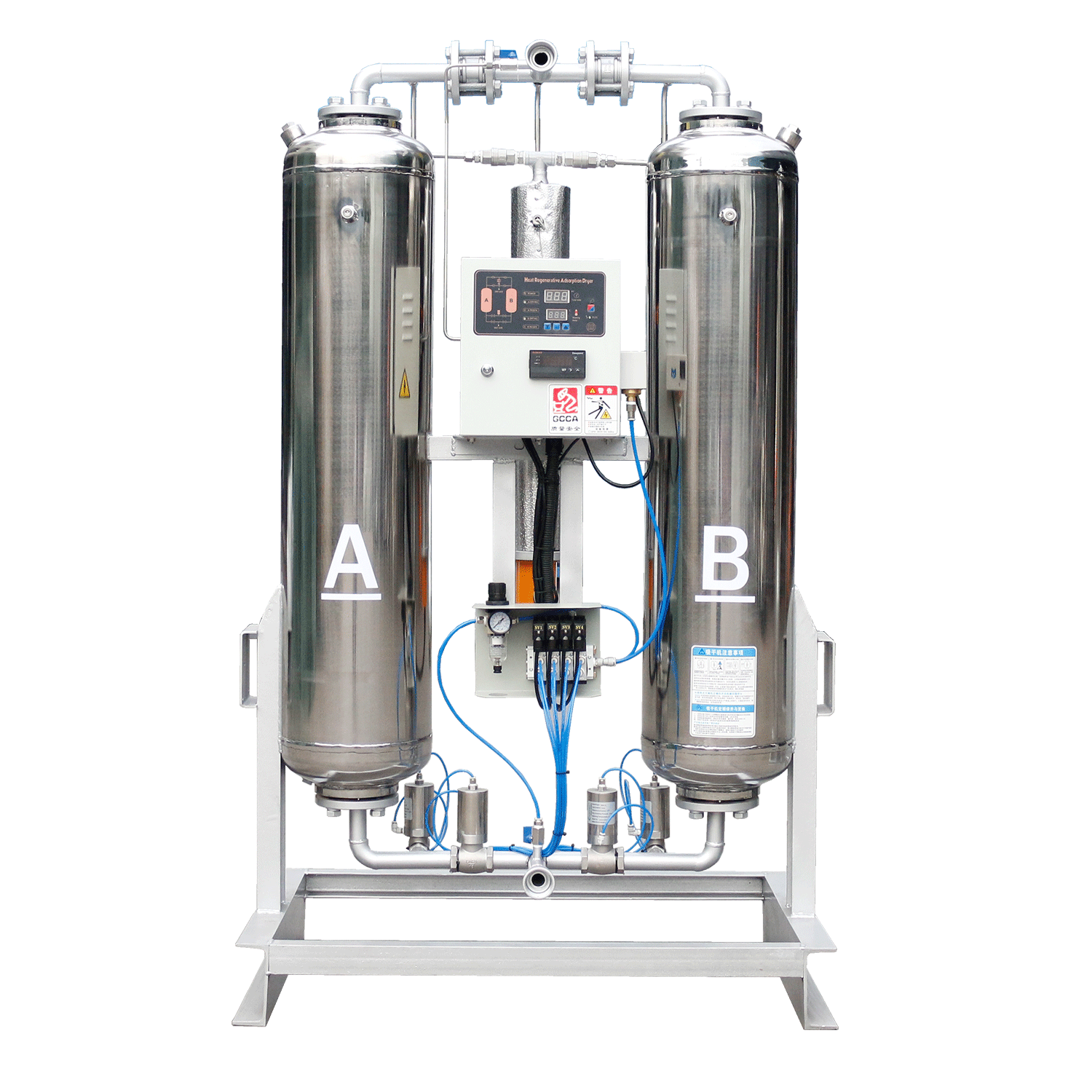
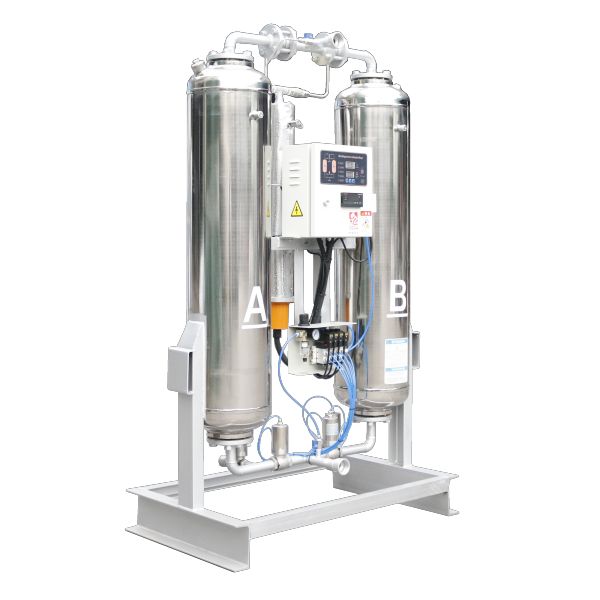
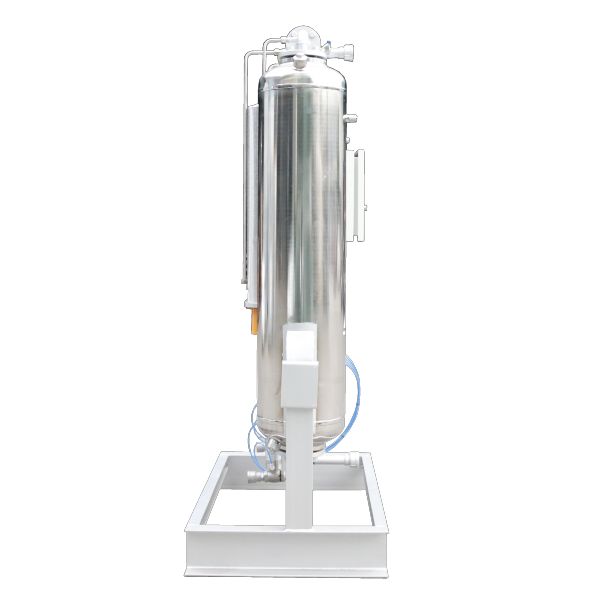
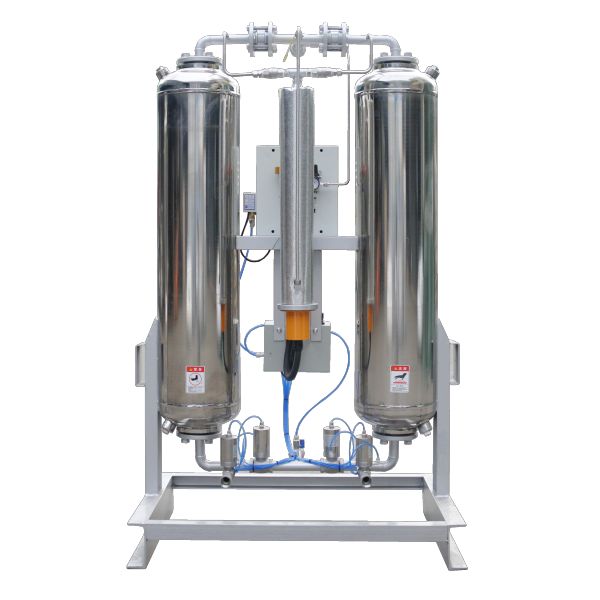
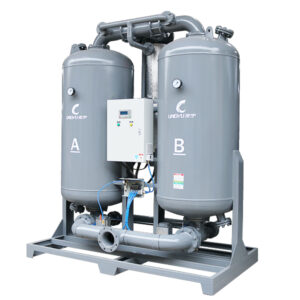
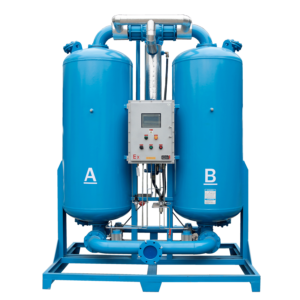
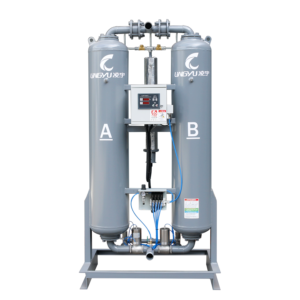
The stainless steel compressed air adsorption dryer is designed to provide clean, dry, and stable compressed air for industries with strict hygiene, corrosion resistance, and air quality requirements. It is especially suitable for applications where standard carbon steel equipment may not meet environmental or cleanliness standards.
This dryer operates through an adsorption and regeneration process. Moisture in the compressed air is absorbed by a high-performance desiccant inside the drying towers. While one tower is used for drying, the other tower is regenerated to restore its adsorption capacity. Through alternating tower operation, the system can continuously deliver dry compressed air with a stable outlet dew point.
By combining PSA (Pressure Swing Adsorption) and TSA (Temperature Swing Adsorption) principles, the dryer achieves reliable moisture removal, low regeneration gas consumption, and efficient long-term operation. Its stainless steel construction also offers excellent corrosion resistance, high-temperature resistance, and easy cleaning performance, making it ideal for demanding industrial environments.
To ensure reliable operation and consistent drying performance, the stainless steel adsorption dryer should be used under the following recommended conditions:
- Applicable fluids: compressed air and nitrogen
- Inlet air pressure: standard 7 bar, range 6–10 bar
- Inlet air temperature: standard 10–30℃, allowable range 2–40℃
- Inlet air dew point: ≤15℃
- Inlet air oil content: oil-free compressed air or ≤0.1 ppm (mg/m³)
- Working environment temperature: 2–45℃
- Pressure loss at full load: approximately 0.2 bar
For best performance, the dryer should be installed with proper pre-filtration to protect the desiccant and maintain stable air quality. Clean inlet air and controlled operating conditions help extend service life and improve drying efficiency.
In India’s hot climate, seasonal monsoon humidity, and demanding industrial environments, compressed air systems often require not only reliable low-dew-point drying but also stronger hygiene standards, corrosion resistance, and easier cleaning. The stainless steel compressed air adsorption dryer is designed for compressed air and nitrogen applications that need clean, dry, and stable gas quality together with a durable, easy-to-maintain stainless steel structure. With a standard outlet dew point of -20°C to -50°C, low regeneration gas consumption, and PSA + TSA adsorption performance, it is well suited for Indian users operating in moisture-sensitive and cleanliness-focused production environments.
Typical Applications
- Pharmaceutical manufacturing and packaging support
- Food and beverage processing, filling, and packaging areas
- Electronics and precision component production
- Chemical processing environments requiring better corrosion resistance
- Nutraceutical, cosmetic, and clean-process production areas
- Nitrogen drying and clean gas support applications
- Laboratories and controlled production environments
- Automotive production areas requiring cleaner, drier utility air
Why It Fits Indian Working Conditions
- Helps control moisture in hot and humid operating conditions, especially during monsoon seasons
- Stainless steel construction supports easier cleaning and better corrosion resistance than standard carbon steel equipment
- Suitable for plants where compressed air quality, hygienic design, and long-term durability are all important
- -20°C to -50°C dew point supports moisture-sensitive production, packaging, and utility gas applications
- Can be used for both compressed air and nitrogen, making it suitable for a wider range of industrial processes
Application Note
For the India page, this model is best positioned as a clean-process and corrosion-resistant low-dew-point drying solution. It is especially suitable for pharmaceutical plants, food and beverage facilities, electronics production, chemical environments, and other operations where equipment cleanliness, resistance to corrosion, and stable dry air quality are important. For stricter purity requirements, it should be presented together with the appropriate pre-filtration, oil control, and full air treatment system design.
Explore More Industry Applications