In hospitals, clinics, and medical laboratories, compressed air is used for a variety of critical applications, including respiratory devices, dental equipment, anesthesia delivery, and surgical tools. However, compressed air naturally contains moisture, which can lead to contamination, equipment damage, and compromised patient safety. A medical air dryer is essential for producing clean, dry, and safe compressed air in healthcare environments.
What Is a Medical Air Dryer?
A medical air dryer is a specialized device designed to remove water vapor and other impurities from compressed air before it reaches medical equipment. Unlike standard industrial air dryers, medical air dryers are built to meet strict healthcare standards, ensuring high air quality for sensitive medical applications.
Why Moisture Control Is Critical in Medical Air Systems
Moisture in medical compressed air can cause:
Bacterial and microbial growth in pipelines
Corrosion and damage to medical instruments
Poor performance of precision equipment
Contamination of sensitive respiratory devices
By removing moisture effectively, a medical air dryer ensures that compressed air is safe, reliable, and free from risks that could impact patient care or equipment longevity.
Types of Medical Air Dryers
Medical air dryers are typically available in the following types:
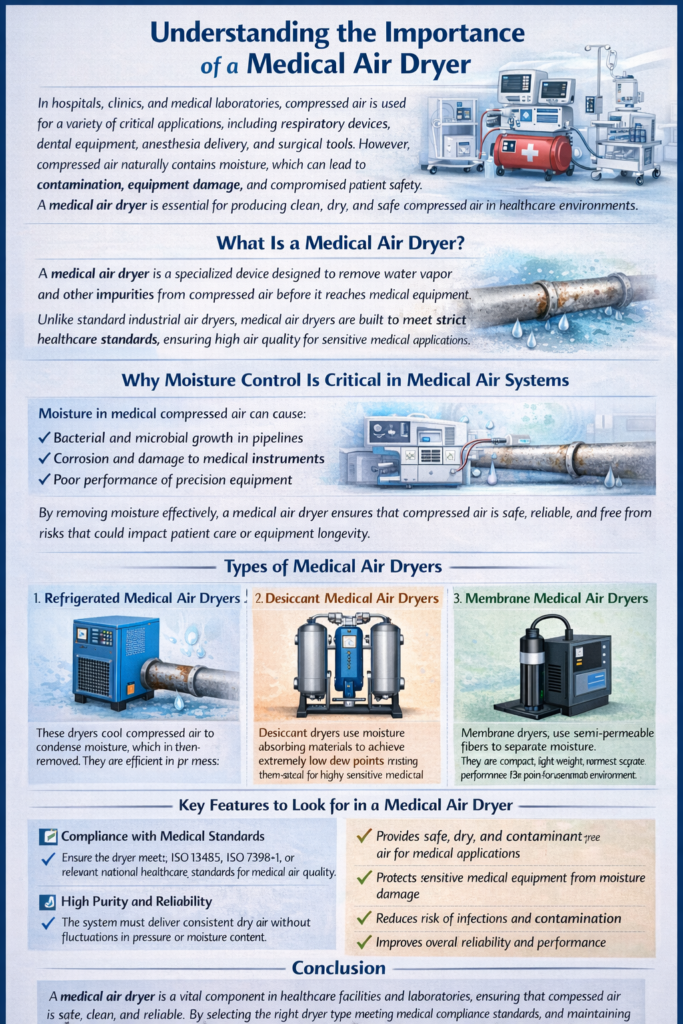
1. Refrigerated Medical Air Dryers
These dryers cool compressed air to condense moisture, which is then removed. They are efficient and suitable for most medical applications requiring moderate dryness.
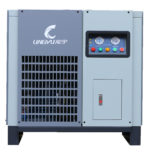
2. Desiccant Medical Air Dryers
Desiccant dryers use moisture-absorbing materials to achieve extremely low dew points, making them ideal for highly sensitive medical instruments and laboratory environments.
3. Membrane Medical Air Dryers
Membrane dryers use semi-permeable fibers to separate moisture from compressed air. They are compact, lightweight, and require minimal maintenance, making them suitable for point-of-use medical devices.
Key Features to Look for in a Medical Air Dryer
Compliance with Medical Standards
Ensure the dryer meets ISO 13485, ISO 7396-1, or relevant national healthcare standards for medical air quality.High Purity and Reliability
The system must deliver consistent dry air without fluctuations in pressure or moisture content.Energy Efficiency
Efficient medical air dryers reduce operational costs while maintaining performance.Ease of Maintenance
Regular service and filter replacement should be straightforward to prevent system downtime.
Benefits of Using a Medical Air Dryer
Provides safe, dry, and contaminant-free air for medical applications
Protects sensitive medical equipment from moisture damage
Reduces risk of infections and contamination
Improves overall reliability and performance of compressed air systems
Conclusion
A medical air dryer is a vital component in healthcare facilities and laboratories, ensuring that compressed air is safe, clean, and reliable. By selecting the right dryer type, meeting medical compliance standards, and maintaining optimal performance, medical facilities can protect both their equipment and patients. Investing in a high-quality medical air dryer is an essential step toward safer, more efficient healthcare operations.