In the offshore oil and gas industry, safety and operational reliability are critical. Oil tankers, LNG carriers, offshore platforms, FPSOs, and supply vessels operate in high-risk environments where flammable gases and volatile hydrocarbons are present. A nitrogen generator for oil and gas ships provides a safe, continuous, and cost-effective source of inert gas to prevent explosions, protect cargo, and ensure regulatory compliance.
By producing nitrogen directly onboard, vessels eliminate dependency on delivered gas cylinders while enhancing safety and operational flexibility.
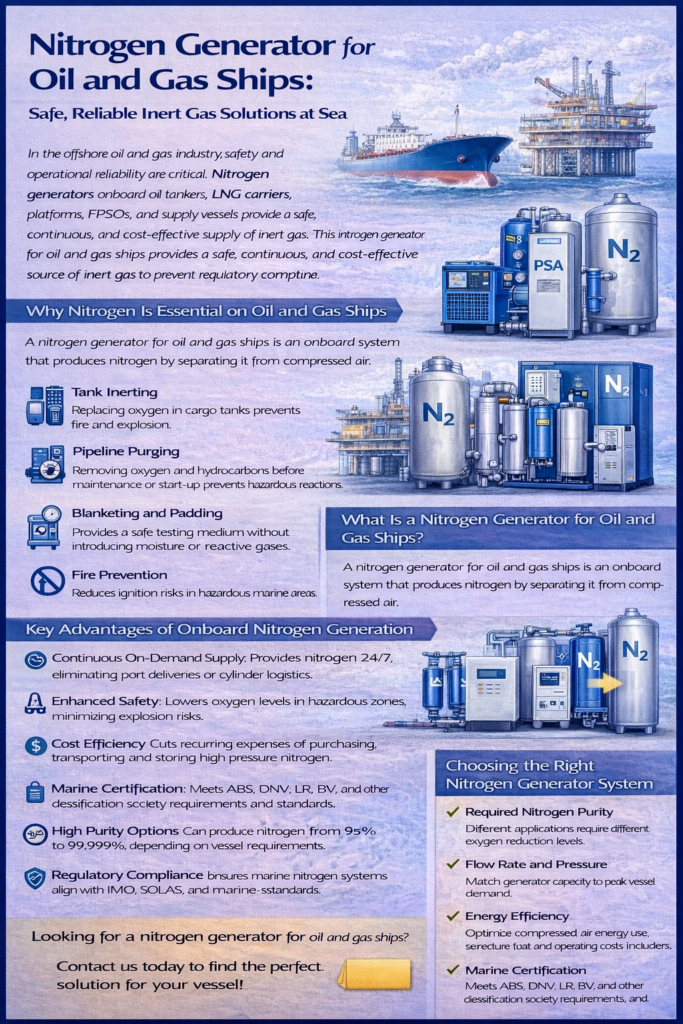
Why Nitrogen Is Essential on Oil and Gas Ships
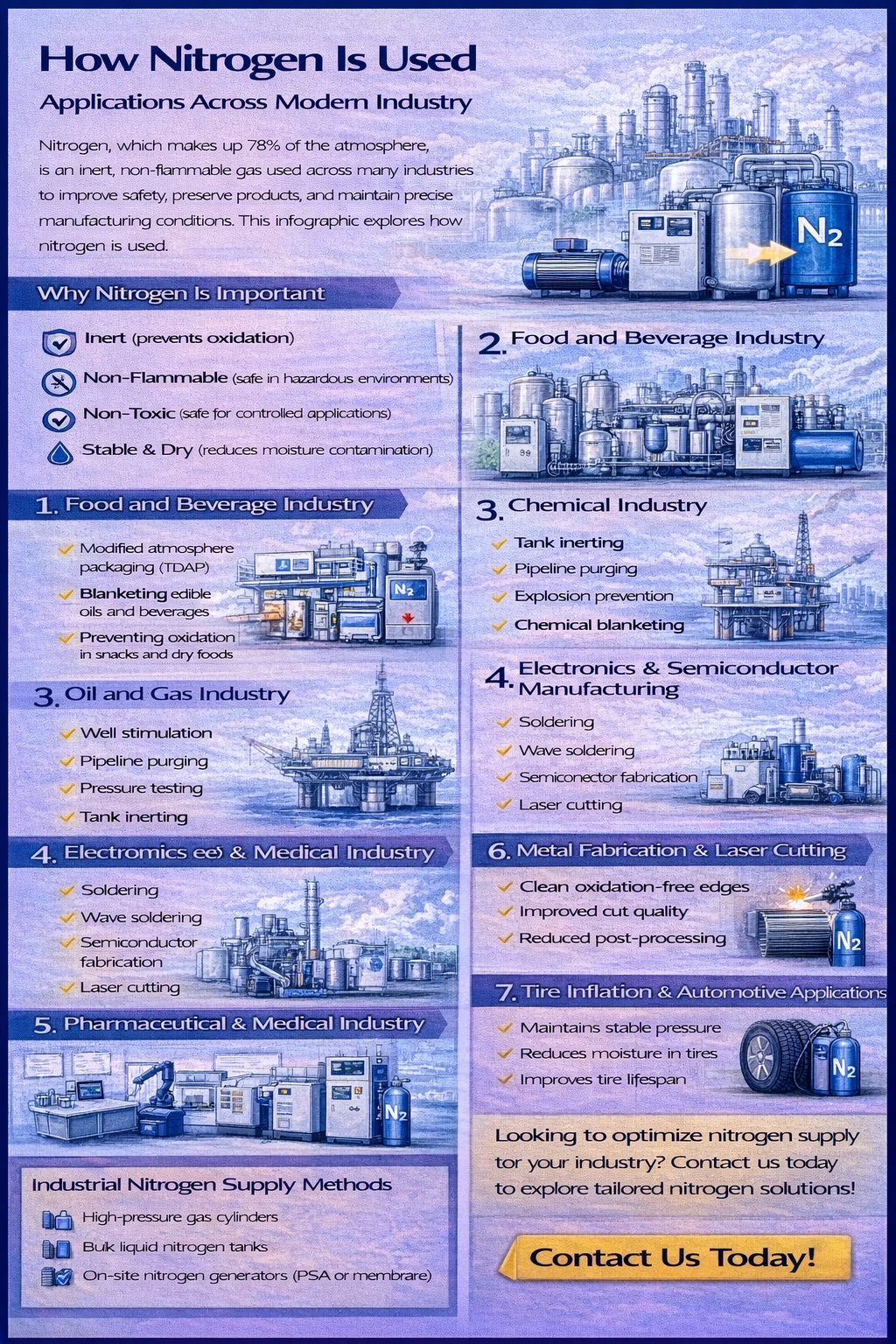
Nitrogen is an inert, non-flammable gas that does not support combustion. In marine oil and gas operations, nitrogen is primarily used to:
Tank Inerting
Displacing oxygen in cargo tanks and storage compartments reduces the risk of fire and explosion.
Pipeline Purging
Removing oxygen and hydrocarbons before maintenance or start-up prevents hazardous reactions.
Blanketing and Padding
Maintaining an inert atmosphere in tanks and processing systems protects volatile materials.
Pressure Testing and Leak Detection
Nitrogen provides a safe testing medium without introducing moisture or reactive gases.
Fire Prevention
Inert environments reduce ignition risks in hazardous marine areas.
What Is a Nitrogen Generator for Oil and Gas Ships?
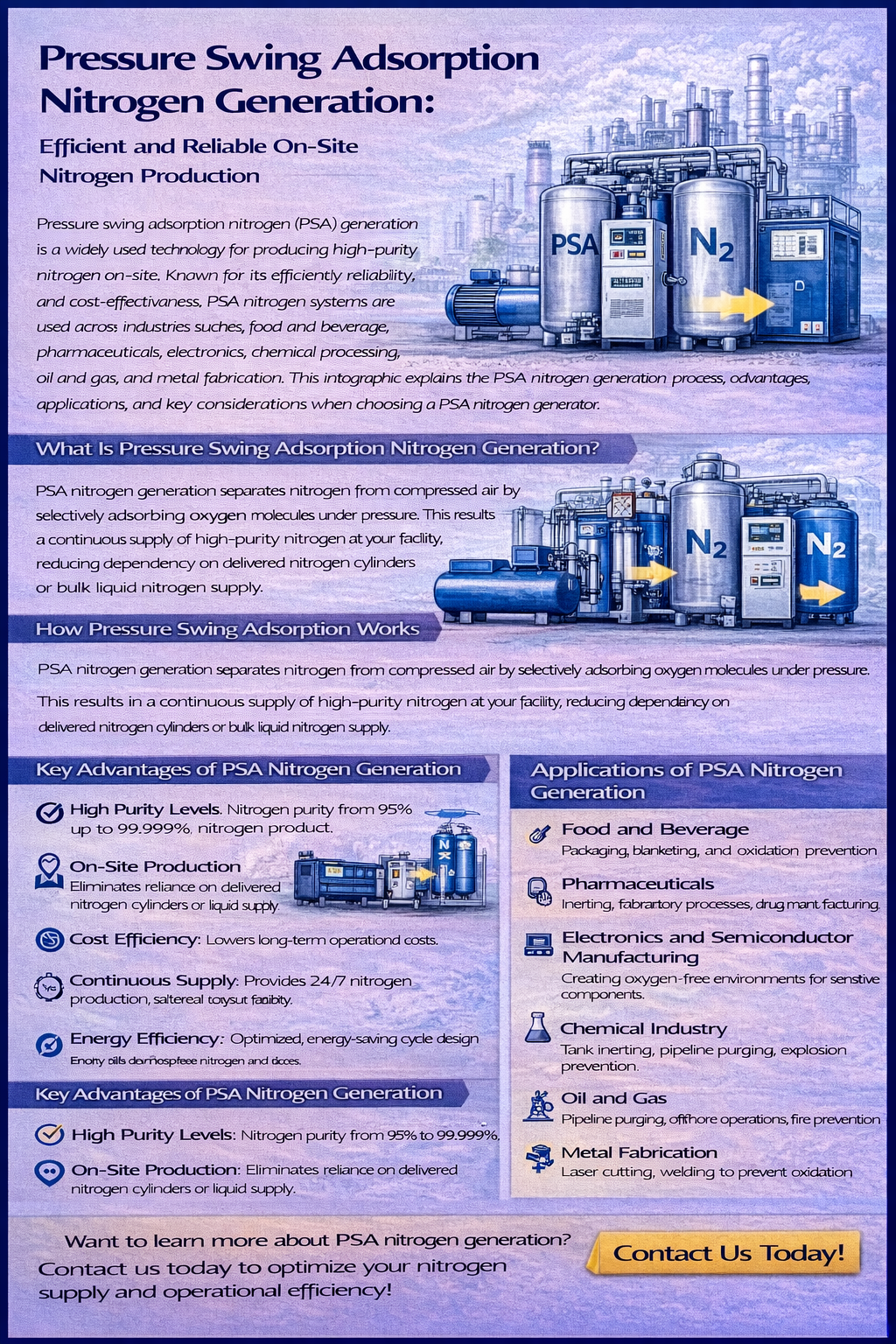
A nitrogen generator for oil and gas ships is a marine-engineered system that produces nitrogen onboard by separating it from compressed air. These systems typically use:
Pressure Swing Adsorption (PSA) technology
Membrane separation technology
The generated nitrogen is delivered directly to storage tanks, pipelines, or cargo systems at the required purity and pressure.
Marine nitrogen generators are specifically designed to withstand:
High humidity and saltwater environments
Continuous vessel vibration
Space limitations onboard
Harsh offshore operating conditions
Key Advantages of Onboard Nitrogen Generation
Continuous On-Demand Supply
Produces nitrogen 24/7 without relying on port deliveries or cylinder logistics.
Enhanced Safety
Reduces oxygen levels in hazardous zones, minimizing explosion risks.
Cost Efficiency
Eliminates recurring costs of purchasing, transporting, and storing high-pressure nitrogen cylinders.
Compact Marine Design
Engineered for space-saving installation in engine rooms or dedicated system compartments.
High Purity Options
Systems can deliver nitrogen purity from 95% to 99.999%, depending on vessel requirements.
Regulatory Compliance
Supports IMO, SOLAS, and marine safety standards for inert gas systems.
Applications on Different Vessel Types
Oil Tankers
Cargo tank inerting and vapor control during loading and unloading.
LNG and LPG Carriers
Tank purging, drying, and safe handling of cryogenic gases.
Offshore Platforms and FPSOs
Pipeline purging, equipment blanketing, and safety protection.
Drill Ships and Supply Vessels
Well intervention, pressure testing, and maintenance operations.
Important Factors When Selecting a Nitrogen Generator for Oil and Gas Ships
When choosing a nitrogen generator for marine oil and gas use, consider:
Required Nitrogen Purity
Different operations require different oxygen reduction levels.
Flow Rate and Pressure
Match generator capacity to peak vessel demand.
Marine Certification
Ensure compliance with classification societies such as ABS, DNV, LR, or BV.
Energy Efficiency
Optimize compressed air consumption to reduce fuel and operating costs.
System Redundancy
Critical vessels may require backup units for continuous safety.
Maintenance and Reliability
Choose systems designed for low maintenance and long service intervals.
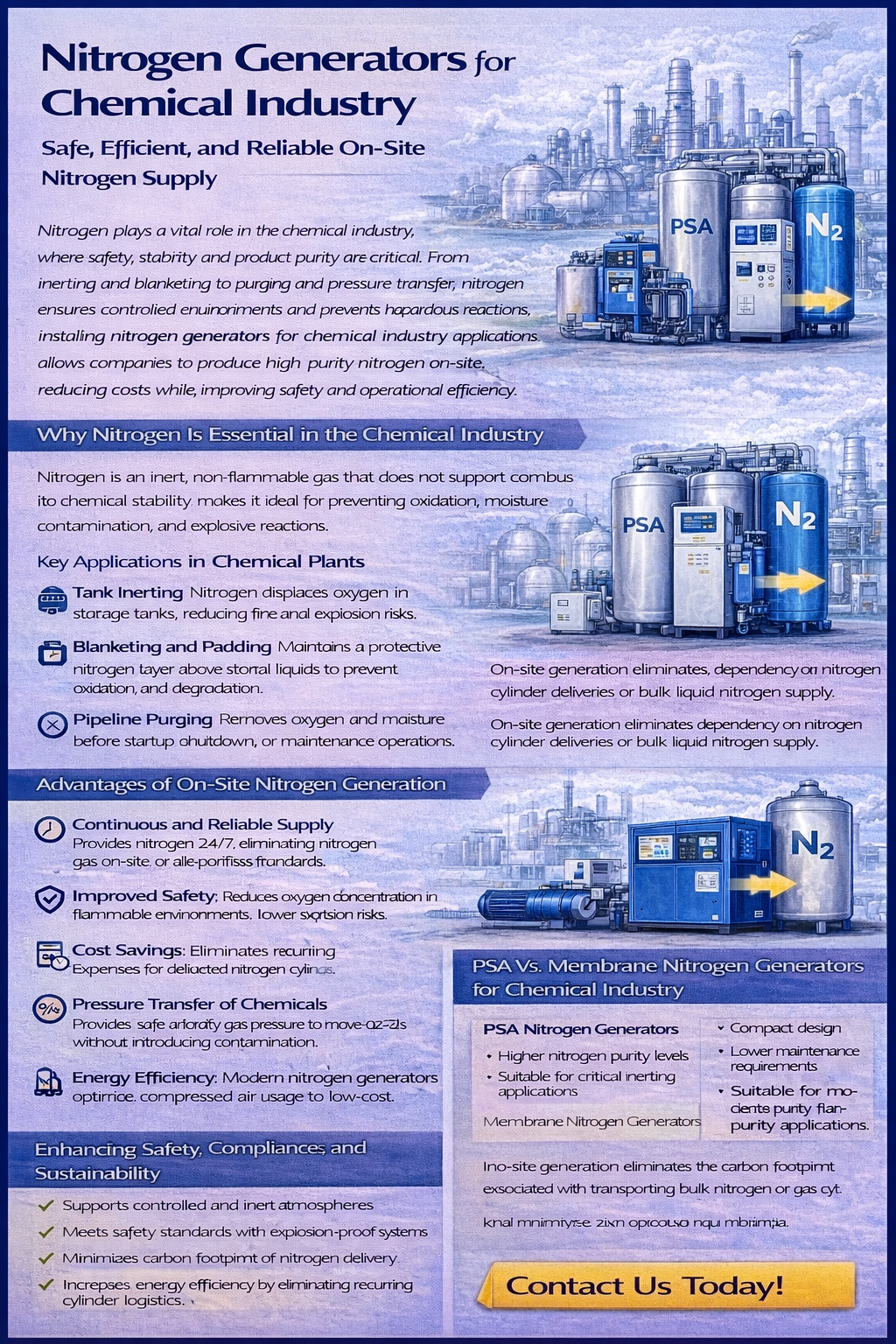
PSA vs. Membrane Technology for Marine Use
PSA Nitrogen Generators
Higher nitrogen purity
Ideal for critical inerting applications
Suitable for large vessels
Membrane Nitrogen Generators
Compact and lightweight
Lower maintenance
Ideal for smaller vessels or moderate purity requirements
The right choice depends on vessel size, cargo type, and operational requirements.
Safety and Compliance in Offshore Environments
Marine nitrogen systems must meet strict offshore safety standards. Proper system integration ensures:
Explosion-proof components
ATEX-compliant designs for hazardous areas
Oxygen monitoring and alarm systems
Automated control and pressure regulation
Reliable emergency shut-off mechanisms
A properly engineered nitrogen generator significantly enhances onboard safety and reduces operational risk.
Conclusion
A nitrogen generator for oil and gas ships is a critical safety and operational asset for marine energy operations. By generating nitrogen onboard, vessels gain continuous inert gas supply, improved safety, reduced operating costs, and full regulatory compliance.
Whether for tank inerting, pipeline purging, or cargo protection, investing in a high-quality marine nitrogen generation system ensures reliable performance in the most demanding offshore environments.
Contact us today to learn more about our marine-certified nitrogen generator solutions for oil and gas vessels.