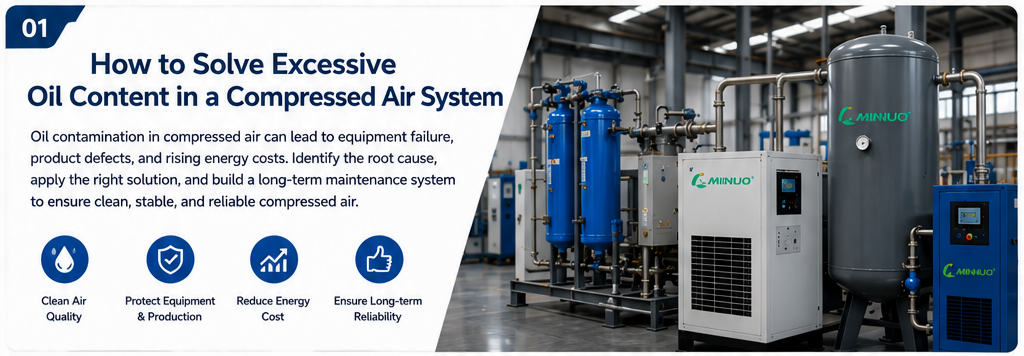
1. Identify the Root Cause First: Determine Where the Oil Is Coming From
When dealing with excessive oil contamination in a compressed air system, the biggest mistake is rushing into corrective actions without identifying the source of the problem.
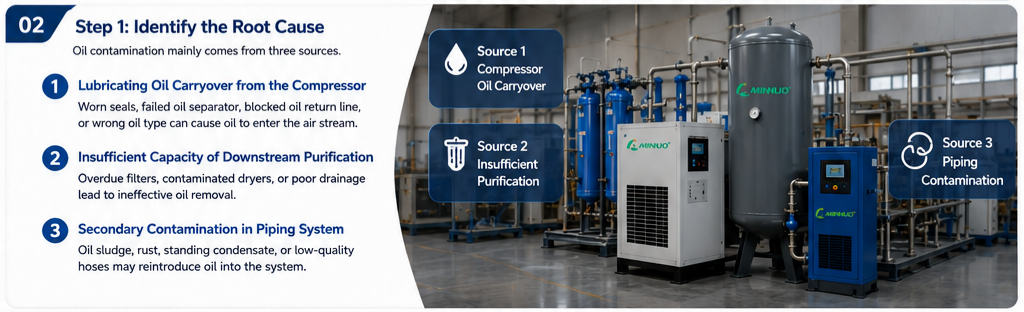
Oil contamination in compressed air generally originates from three major sources, each corresponding to different equipment failures and operating conditions. Accurate troubleshooting requires systematic inspection and root cause analysis.
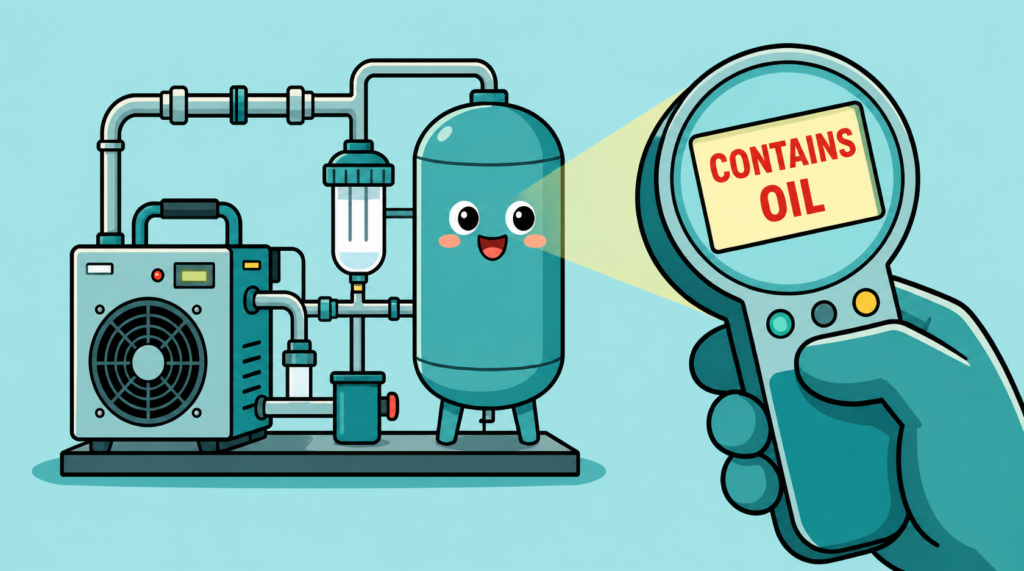
1.1 Lubricating Oil Carryover from the Air Compressor
This is the most common and critical source of excessive oil content.
Rotary screw air compressors rely on lubricating oil to cool the rotors, seal internal clearances, and reduce operating noise. Once abnormal operating conditions occur, large amounts of lubricating oil may enter the compressed air stream and contaminate the downstream piping system.
1) Worn or Failed Oil Seals
When the shaft seals or sealing components inside the compressor wear out, harden, or crack, lubricating oil can directly enter the compression chamber and be carried downstream with the compressed air.
Typical symptoms include a rapid increase in oil concentration within a short period of time.
2) Oil Separator Failure
The oil separator element is the first and most important oil removal barrier inside the compressor.
If the separator element becomes:
- clogged,
- damaged,
- saturated,
- or exceeds its service life,
fine oil droplets will pass through the separator and form oil mist carryover.
This is one of the most common failures in small and medium-sized industrial facilities.
3) Blocked Oil Return Line
Separated lubricating oil normally returns to the compressor oil sump through the oil return line.
If carbon deposits or clogged filters restrict the return line, the oil cannot return properly and will continuously be carried into the downstream system.
4) Incorrect Lubricating Oil Selection
Using:
- non-approved compressor oil,
- incorrect viscosity grades,
- or low-quality recycled oil
can cause emulsification and thermal cracking under high-temperature operating conditions.
This generates large quantities of lightweight oil mist that conventional filter elements may not effectively remove.
1.2 Insufficient Capacity of Downstream Purification Equipment
Compressed air discharged from the compressor must pass through additional purification equipment such as:
- refrigerated air dryers,
- desiccant dryers,
- precision filters,
- and activated carbon filters.
Failure of any stage can result in excessive residual oil content.
1) Overdue Precision Filter Replacement
Pre-filters, coalescing filters, and high-efficiency oil removal filters all have limited service lives.
If filter elements are not replaced on schedule:
- filter pores become clogged,
- filtration layers deteriorate,
- and oil removal efficiency decreases significantly.
2) Contaminated Desiccant Dryer
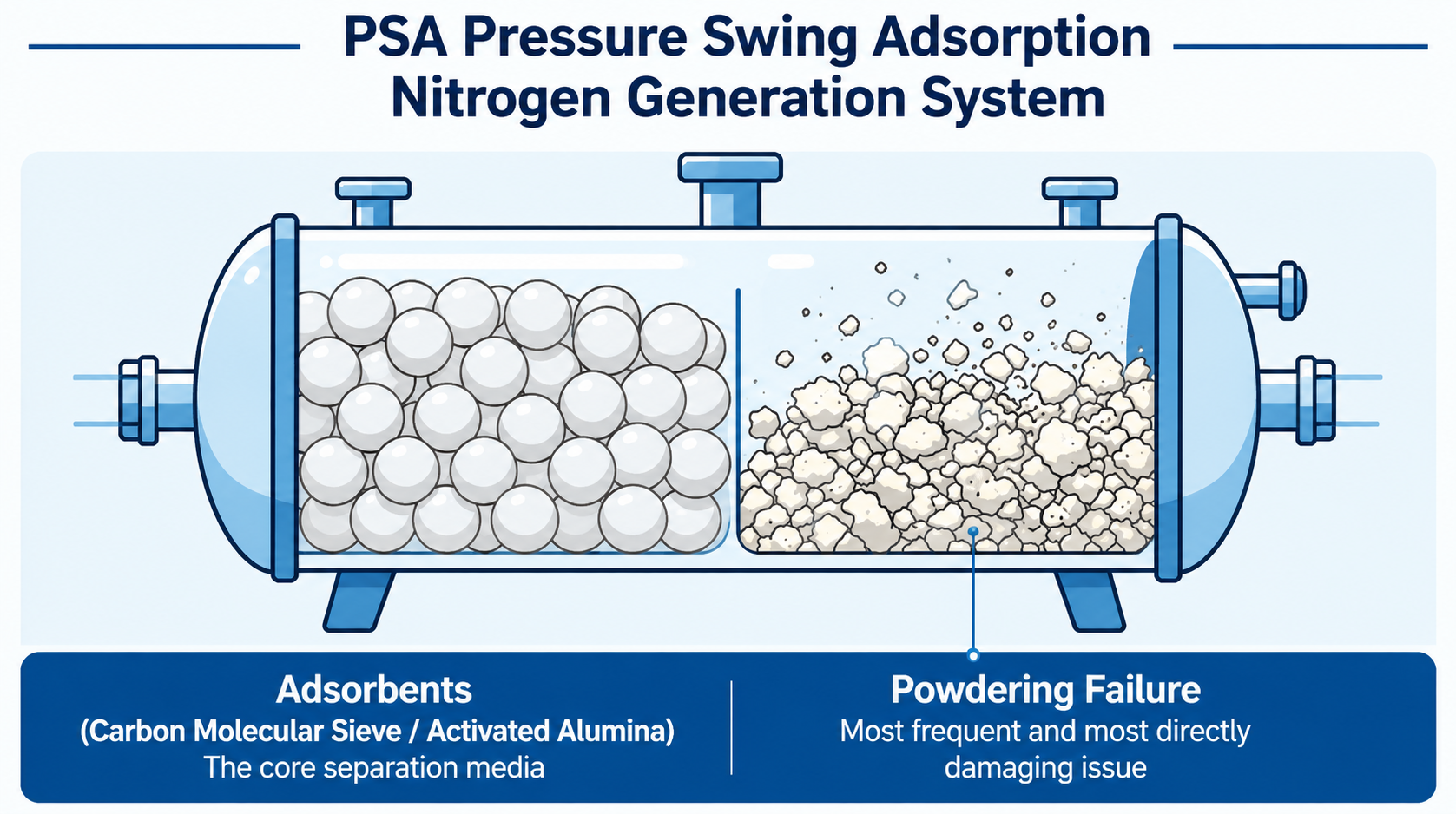
When oil mist contaminates the adsorbent inside a desiccant dryer, the adsorbent rapidly loses performance.
The dryer may not only fail to remove moisture but can also release accumulated oil contamination back into the compressed air stream, causing secondary pollution.
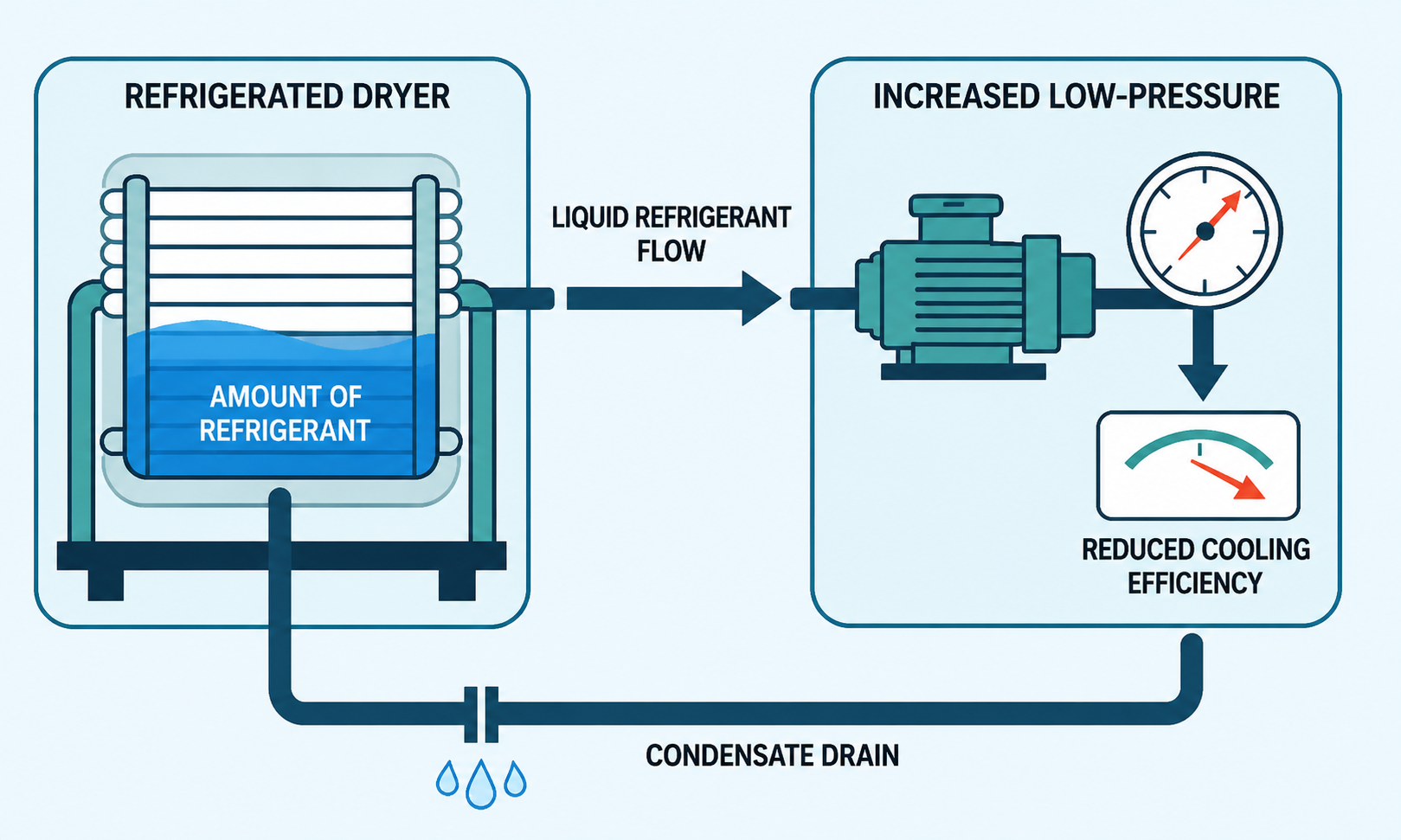
3) Poor Condensate Drainage in Refrigerated Dryers
Oil contained in compressed air often mixes with condensate water.
If automatic drain valves become blocked, oil-water mixtures accumulate inside the system.
Airflow disturbances may re-atomize the oil and worsen contamination levels.
1.3 Secondary Contamination from the Piping System
In many factories, excessive oil contamination continues even after upstream equipment has been repaired.
The hidden problem is often located inside the compressed air piping network.
Common Causes Include:
- Large amounts of sludge and rust accumulated inside old pipelines
- Oil deposits being reintroduced into the air stream during startup or airflow surges
- Lack of drain valves at low points in the piping system
- Long-term accumulation of oil-water mixtures
- Rubber hoses swelling after prolonged oil exposure and releasing oily contaminants into the air system
2. Corrective Actions by Severity Level
Oil contamination problems should be classified according to severity.
Based on industrial standards such as:
- GB 50029 — Design Code for Compressed Air Stations
- GB/T 30475 — Technical Requirements for Compressed Air Purification Equipment
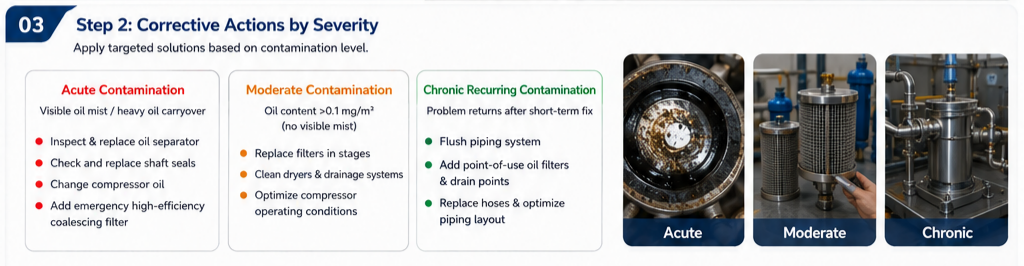
corrective measures can generally be divided into three categories:
- Acute contamination
- Moderate contamination
- Chronic recurring contamination
2.1 Acute Oil Contamination
Immediate Action Required to Prevent System-Wide Contamination
If visible oil mist is present in the compressed air or large amounts of oil accumulate in downstream equipment, the situation should be treated as acute contamination.
The compressor must be shut down immediately for inspection.
Recommended Actions
1) Inspect the Oil Separator
Disassemble and inspect the separator element.
If the element is:
- damaged,
- darkened,
- saturated with oil,
- or structurally deteriorated,
replace it immediately with a qualified OEM separator element.
At the same time:
- clean the oil return line,
- clean the oil return filter,
- and verify unobstructed oil return flow.
2) Inspect Main Shaft Seals
If oil leakage is visible around the housing or discharge outlet, replace the shaft seals immediately to prevent continuous oil carryover.
3) Replace Compressor Oil
Drain degraded oil completely.
Use only manufacturer-approved compressor oil compatible with the equipment model.
Clean carbon deposits inside the oil sump to eliminate contamination caused by poor-quality oil.
4) Install Temporary High-Efficiency Oil Filters
Emergency high-efficiency coalescing filters may be installed temporarily at the compressor outlet to quickly reduce oil mist contamination and protect downstream equipment.
2.2 Moderate Oil Contamination
Optimize the Purification Chain
If oil concentration exceeds:
0.1 mg/m³
(the typical general industrial compressed air standard)
but no visible oil mist is present, the issue is considered moderate contamination.
In this case, the focus should be on improving downstream purification efficiency.
Recommended Actions
1) Replace Filter Elements in Stages
Replace filters sequentially:
- pre-filter,
- intermediate oil removal filter,
- high-efficiency precision filter.
Strictly follow replacement intervals of:
3000–8000 operating hours
depending on operating conditions.
2) Clean Dryers and Drain Systems
Clean:
- refrigerated dryer heat exchangers,
- automatic drain valves,
- condensate discharge systems.
Ensure condensate is removed promptly.
For desiccant dryers:
replace contaminated molecular sieve or activated alumina adsorbents.
3) Optimize Compressor Operating Conditions
Avoid prolonged high-temperature full-load operation.
Excessive discharge temperatures accelerate oil cracking and increase light oil mist generation.
Maintain discharge temperatures within manufacturer specifications.
2.3 Chronic Recurring Oil Contamination
Eliminate Secondary Piping Contamination
If oil contamination repeatedly returns after short-term improvement, the core issue is usually secondary contamination within the piping network.
A systematic reconstruction and long-term management strategy is required.
Recommended Actions
1) Clean the Piping System
Perform sectional pipeline blowdown using clean, dry, oil-free compressed air.
Remove sludge and deposits from pipe walls.
Severely corroded pipelines should be replaced with stainless steel piping.
2) Add Point-of-Use Oil Removal Filters
Install additional oil removal filters:
- at critical pipeline nodes,
- and before sensitive end-use equipment.
Add manual drain points for regular removal of accumulated oil-water mixtures.
3) Replace Rubber Hoses
Replace oil-contaminated rubber hoses with:
- PU hoses,
- or stainless steel braided flexible hoses.
This prevents hose swelling and oil leaching.
4) Optimize Piping Layout
Reduce:
- dead legs,
- low points,
- and areas where oil-water mixtures may accumulate.
Proper piping design significantly reduces long-term contamination risks.
3. Long-Term Prevention and System Management
Temporary repairs alone cannot permanently solve oil contamination problems.
The key to long-term reliability is establishing a standardized maintenance and management system.
3.1 Establish Oil and Filter Maintenance Records
Recommended Practices
- Use only OEM-approved compressor lubricants
- Record oil replacement intervals and operating hours
- Maintain replacement records for:
- separator elements,
- coalescing filters,
- precision filters
Never delay replacement based solely on experience.
Maintenance intervals should follow actual operating conditions and industry standards.
3.2 Implement Routine Inspection Procedures
Daily Inspection
- Check compressor discharge temperature
- Inspect oil return conditions
Weekly Inspection
- Inspect condensate drainage systems
- Verify proper operation of purification equipment
Monthly Inspection
- Conduct compressed air oil-content testing at end-use points
Early detection prevents small issues from escalating into system-wide contamination problems.
3.3 Standardize Startup and Shutdown Procedures
Frequent compressor startup and shutdown cycles create strong airflow fluctuations that can blow accumulated oil contamination into the piping network.
Recommended Practices
- Minimize unnecessary startup/shutdown cycles
- After extended shutdown periods:
- operate the compressor under unloaded conditions first,
- purge internal oil residues,
- then reconnect the downstream piping system.
Conclusion
Excessive oil contamination in compressed air systems is rarely caused by a single factor.
In most cases, it results from a combination of:
- compressor-related oil carryover,
- purification system inefficiency,
- piping contamination,
- improper maintenance,
- and poor operating practices.
By identifying the root cause systematically, implementing targeted corrective actions, and establishing long-term maintenance standards, factories can effectively control oil contamination, improve compressed air quality, protect downstream equipment, and ensure stable production operations.